

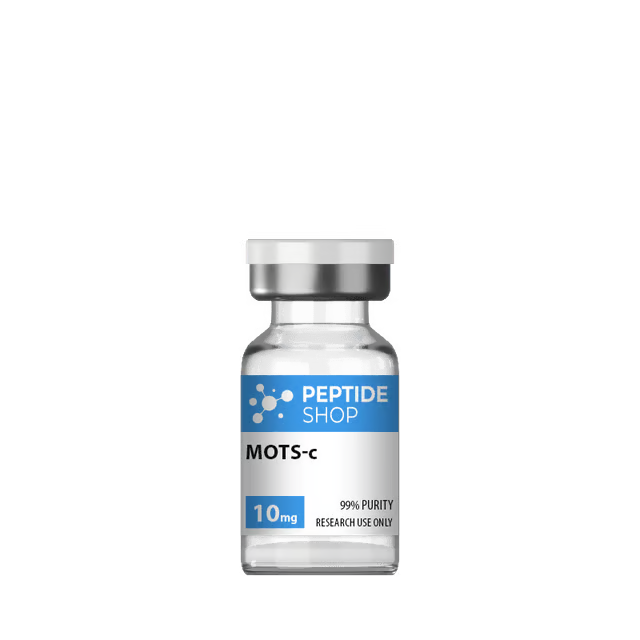
MOTS-c Peptide 10mg
Original price was: $140.00.$110.00Current price is: $110.00.
Peptide de haute pureté associée
MOTS-c is a small peptide derived from mitochondrial DNA . Since its discovery, it has generated considerable interest in the scientific community due to its crucial role in metabolic regulation and cellular functions. Composed of 16 amino acids, MOTS-c acts as a mitochondrial signaling molecule, influencing metabolic pathways related to energy balance, metabolic health, and stress resistance.
Search WORDS-c
Mechanism of action
Unlike most peptides encoded by nuclear DNA, MOTS-c originates from mitochondrial DNA. It acts by activating AMP-activated protein kinase (AMPK) , a key regulator of energy metabolism. The actions triggered by MOTS-c promote glucose uptake, stimulate fatty acid oxidation, and contribute to cellular homeostasis under metabolic stress.
Glucose metabolism
Scientific studies have demonstrated that the MOTS-c peptide improves glucose uptake by skeletal muscles, similar to the effect of physical exercise. This peptide increases insulin sensitivity by acting via AMP kinase (APMK), a central regulator of energy homeostasis, and promotes glucose consumption.
In experimental models, MOTS-c administration significantly improved glucose tolerance and reduced insulin resistance. This suggests a potential benefit of MOTS-c in the management of type 2 diabetes and other metabolic disorders.
MOTS-c mimics exercise that enhances glucose absorption, acting as a metabolic signal without requiring physical exercise; this is relevant for both sedentary lifestyles and aging populations.
The maintenance of glucose homeostasis, ensured by MOTS-c, could protect against hyperglycemic attacks in target tissues of diabetic complications .
Aging and longevity
Preliminary data suggest that MOTS-c acts against mitochondrial dysfunction, a crucial sign of aging. With age, mitochondrial health deteriorates, leading to metabolic inefficiency, decreased energy production, and increased oxidative stress.
MOTS-c stimulates the formation of new, healthy mitochondria, thereby improving cellular energy production and resilience. It activates antioxidant pathways to protect cells from oxidative stress and free radical damage, which accelerate aging.
Animal studies have revealed that MOTS-c increases lifespan in aging models by improving energy efficiency and reducing metabolic decline.
This peptide appears to affect the expression of nuclear genes, including cellular stress response and longevity genes, thus highlighting its dual mitochondrial and nuclear role in cellular health.
Physical performance
MOTS-c could be a potentially performance-enhancing peptide due to its direct influence on energy production and cellular efficiency.
Research has shown that MOTS-c supplementation improves endurance and stamina by stimulating ATP production in mitochondria. This results in better energy utilization during prolonged physical exertion.
This peptide enhances mitochondrial repair and reduces inflammation after physical training; it also amplifies the benefits of exercise, such as improved cardiovascular efficiency, greater endurance, and optimized glucose metabolism .
Obesity and fat metabolism
Tests on mice indicate that MOTS-c may regulate body weight via increased fatty acid oxidation and greater energy expenditure; by activating AMPK, the body’s energy source shifts from glucose to fat, thus reducing lipid accumulation and improving overall metabolic function.
MOTS-c increases fatty acid oxidation, making stored fat a primary energy source. Preclinical animal studies have shown that MOTS-c can reduce body fat percentage without affecting lean muscle mass and is therefore considered one of the most promising candidates for obesity prevention. MOTS-c addresses the multiple causes of metabolic syndrome, such as obesity, hyperglycemia, and lipid imbalance, by improving glucose metabolism, reducing fat storage, and promoting mitochondrial health.
Summary
MOTS-c peptides represent a major advance in mitochondrial and metabolic research . Their potential to enhance energy, regulate metabolism, and support anti-aging mechanisms makes them a very promising tool for scientific research. However, further research is essential to understand their applications and long-term effects.
MOTS-c will remain an exciting topic for scientists and researchers, as it has major implications for health and longevity.
Be the first to review “MOTS-c Peptide 10mg”
Related products
Peptides
Peptides
Peptides
Peptides
Peptides
Peptides
Peptides
Peptides
Reviews
There are no reviews yet.