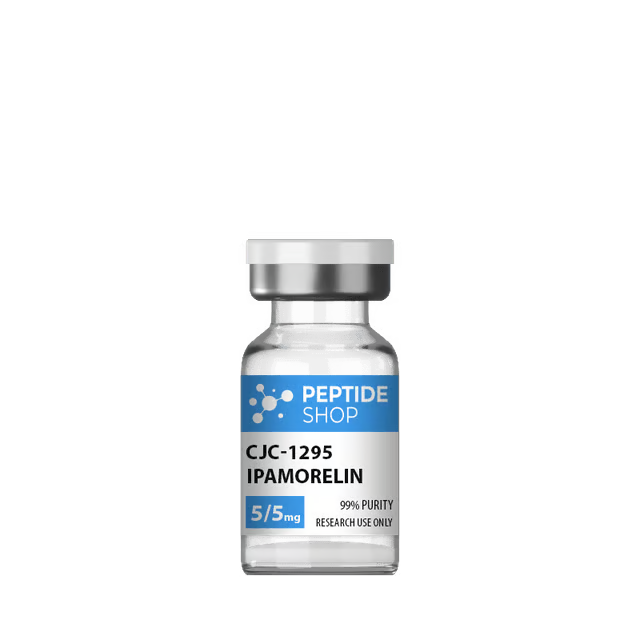
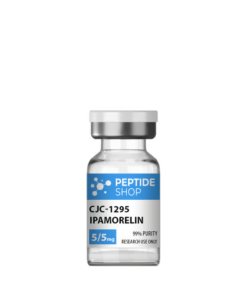
CJC-1295 Ipamorelin
Original price was: $120.00.$90.00Current price is: $90.00.
Peptide for research
Researchers suggest that both CJC-1295 and ipamorelin increase growth hormone (GH) levels by stimulating the anterior pituitary gland. Based on clinical trials, scientists believe that once stimulated, growth hormone is naturally secreted, thus maintaining GH levels in the body.
CJC-1295 is a growth hormone-releasing hormone that contains 30 amino acids that stimulate increased secretion of GH and IGF-1, or insulin-like growth factor.
In contrast, ipamorelin is a beta-cell stimulating hormone, meaning that it extracts hormones into the bloodstream and stimulates the pituitary gland to produce them.
Research and clinical studies
Half-life
Clinical studies were conducted on subjects to determine the half-life of these two peptides. Scientists measured growth hormone levels after each peptide administration. They observed a single peak in growth hormone release at 0.67 hours, followed by an exponential decline. This study allowed scientists to conclude that the Ipamorelin peptide has a short half-life of two hours after the onset of its potential decline.
CJC-1295 appears to have a much longer half-life. According to researchers, a single administration of this peptide can regulate growth hormone production for an extended period and contribute to a 46% increase in GH secretion. Various studies suggest its half-life ranges from 5.8 to 8.1 days.
General search
In the early 2000s, a clinical trial was conducted on control subjects. One group received a placebo, while the other received the peptide CJC-1295. Blood samples were taken from both groups one week before and one week after the intervention to monitor changes in growth hormone levels. At the end of the study, it was concluded that the group receiving CJC-1295 showed a 7.5-fold increase in growth hormone levels compared to the placebo group.
CJC-1295 and ipamorelin are both growth hormone stimulators, but of different types. CJC-1295 acts by binding to the GHRH receptor on pituitary cells and inducing conformational changes that activate G proteins. This triggers the production of secondary messengers such as cAMP and IP3, thereby activating protein kinases. These kinases then stimulate the phosphorylation of transcription factors capable of entering the nucleus and inducing the expression of growth hormone-related genes.
Ipamorelin is a GHS-R1a receptor agonist that interacts with the N-terminal end of this receptor. This transient interaction is triggered by van der Waals interactions and hydrogen bonds, inducing a conformational change in the receptor. This change stimulates the activation of Gαq/11 proteins, which in turn activate phospholipase C (PLC). PLC hydrolyzes PIP2 into IP3 and DAG. IP3 induces the release of calcium ions from the endoplasmic reticulum, while DAG activates protein kinase C (PKC). These signals ultimately lead to the release of growth hormone from pituitary cells.
Nitrogen balance
Based on research conducted on experimental models, it appears that CJC-1295 and the ipamorelin mixture induce a positive nitrogen balance and a potential increase in lean mass. The team of scientists assessed the liver’s capacity to produce urea nitrogen (CUNS), a potential indicator of the amount of nitrogen present in the liver. They concluded that ipamorelin may have resulted in a 20% decrease in CUNS compared to the catabolic state artificially induced by the researchers.
Be the first to review “CJC-1295 Ipamorelin”
Related products
Peptides
Peptides
Peptides
Peptides
Peptides
Peptides
Peptides
Peptides
Reviews
There are no reviews yet.