
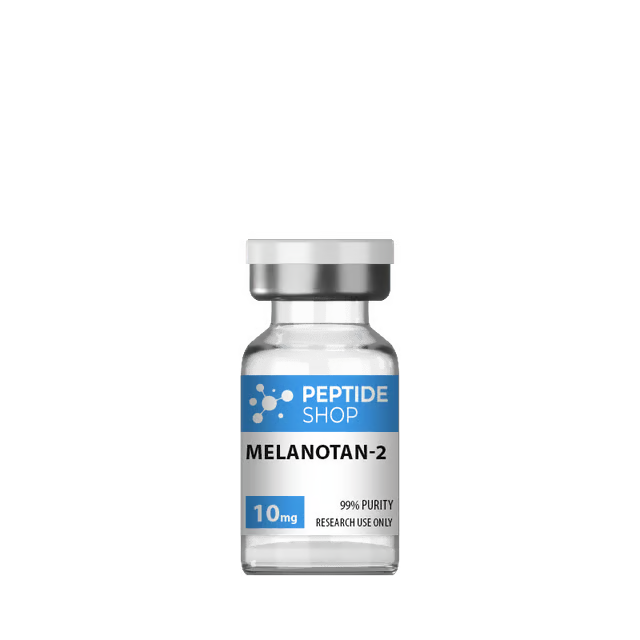
Melanotan-2 10mg
Original price was: $110.00.$70.00Current price is: $70.00.
High-purity peptide for research
Melanotan 2 is a synthetic form of alpha-melanostimulating hormone (α-MSH), which is naturally present in humans . It emerged in the 1980s and was developed by scientists at the University of Arizona after the discovery that α-MSH could induce sexual arousal in rodents, as well as a darkening of their skin.
Originally created as a way to get a tan without sun exposure, Melanotan 2 is said to have very varied effects in the laboratory.
Research on melanotan 2
This peptide acts by interacting with melanocortin receptors. There are five of them, each with different functions.
MC-1R: Stimulation of this receptor causes the skin and hair to darken. It is present in melanocytes.
MC-2R: Located in the adrenal glands, MC-2R initiates the secretion of cortisol .
MC-3R: It plays a role in energy regulation and appetite control.
MC-4R: It causes changes in sexual behavior and feeding. MC-4R may also affect erectile dysfunction in male rodents and energy homeostasis.
MC-5R: This receptor is expressed on pancreatic islet cells and sweat glands.
Melanotan 2 and autism
In mice, Melanotan 2 has shown potential to alleviate certain autistic symptoms, particularly those associated with autism spectrum disorder (ASD). Although no treatment is currently available, some research on oxytocin suggests that this compound may alleviate some behavioral problems associated with ASD .
Using the same mouse model of maternal immune activation that can induce autism, scientists investigated whether MT2 could counteract or mitigate behaviors associated with autism spectrum disorder (ASD), primarily through its ability to stimulate oxytocin release. Their research showed that administering MT2 reversed communication difficulties and reduced social interaction, as well as repetitive behaviors linked to autism.
Scientists have also discovered that Melanotan 2 can stimulate the expression of oxytocin receptors in certain brain regions, thus establishing a direct link between oxytocin and autism spectrum disorder (ASD). These findings open up avenues not only for the development of treatments for ASD, but also for preventative measures that could contribute to the management of autism .
Melanotan 2 and hunger
Evidence suggests that melanotan 2 can reduce feelings of hunger and fat storage in animals. Researchers have discovered that the MC-4R receptor plays a role in food intake and food preferences, and that MT-2 is a potent agonist of this receptor.
When administered to mice , MT-2 resulted in a significant reduction in their food intake and a change in their preference for fatty foods. Mice receiving MT-2 ignored fatty foods they would normally have consumed. In contrast, mice lacking MC-4R receptors consumed almost exclusively fatty foods and were unaffected by MT-2.
Studies indicate that the effects of MT-2 are similar to those of leptin. This hormone, also known as the satiety hormone, reduces food intake and cravings for snacks. However, leptin has never been shown to be an effective treatment for obesity.
Melatotan 2 and diabetes
Hyperglycemia, increased glucagon secretion, and ketone body production characterize diabetes. It has long been known that leptin prevents these factors by stimulating glucose uptake, minimizing glucagon production, and inhibiting the metabolic pathway leading to ketone body formation. It is important to note that this mechanism is insulin-independent, and leptin is being actively researched as an alternative treatment for diabetes in animal models.
Studies have found that the effects of leptin on blood glucose levels are regulated by melanocortin receptors and that MT-2 generates similar effects .
Melanotan 2, alcohol consumption and impulse control
Given that melanotan 2 may influence oxytocin release and behavior in autism spectrum disorder (ASD), studies have also revealed that MC-4R receptors may play an important role in impulse control. Previous trials in rats showed that MT-2 reduces alcohol consumption while increasing water intake, even in rodents that prefer alcohol.
These results demonstrate that MT-2 could not only be effective in treating alcohol-related disorders, but also in reducing cravings in the mammalian brain . These studies could open new avenues for a better understanding not only of hunger and alcohol abuse, but also of the role of oxytocin in impulsive behaviors.
Melanotan 2 and erectile dysfunction
Erectile dysfunction (ED) is often thought to be a vascular problem, and men frequently treat it with Viagra and other medications that improve blood flow by reducing vascular resistance. In animals, scientists have discovered that MT-2 may be effective in treating erectile dysfunction. Research also suggests that MT-2 may have a broader range of applications than Viagra-like drugs, due to its action on the central nervous system.
Résumé
Although this peptide has shown significant positive effects in animals , further trials are needed before its use in humans. However, one thing is certain: given the scientific progress and research being conducted in this field, we expect to see many benefits from Melanotan 2.
Be the first to review “Melanotan-2 10mg”
Related products
Peptides
Peptides
Peptides
Peptides
Peptides
Peptides
Peptides
Peptides
Reviews
There are no reviews yet.