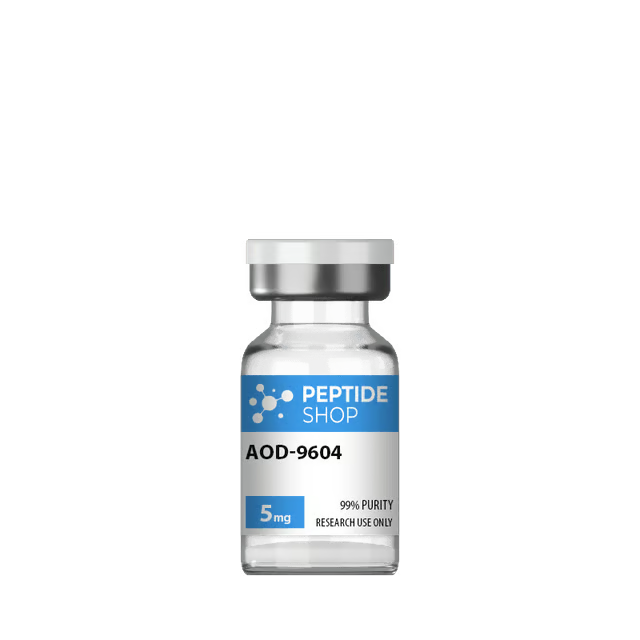
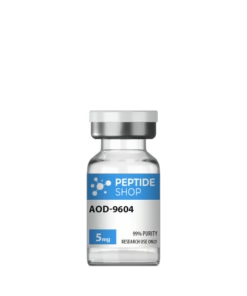
AOD-9604 5mg
Original price was: $130.00.$105.00Current price is: $105.00.
Highly purified pure peptide
AOD9604 is a synthetic peptide, derived from human growth hormone, initially developed as a fat-burning agent, contributing to obesity management and weight loss. The last 16 amino acids of growth hormone have been modified and replicated into a specific peptide called the GH 176-191 fragment, or simply AOD9604.
Furthermore, studies have shown that it does not affect insulin-like growth factor 1 (IGF-1) or insulin levels; therefore, it does not appear to be a contributing factor to glucose intolerance or diabetes. There is also no evidence that the body produces anti-AOD9604 antibodies or triggers an immune response. Researchers thus believe it has future therapeutic potential.
AOD-9604 – Research on obesity and fat burning
AOD-9604 was initially developed as an analog of HGH, designed to combat fat and obesity.
Among the multitude of animal studies, we found a human study conducted in Australia involving 300 obese individuals treated with AOD-9604 for 12 weeks. The results were remarkable: the peptide treatment more than tripled weight loss compared to the placebo. The study also demonstrated that the risk of developing resistance to the treatment was extremely low, suggesting that prolonged treatment could lead to even greater weight loss. Furthermore, AOD-9604 was compared to the world’s best-selling weight-loss drug at the time, allowing patients to achieve even greater weight loss without any side effects.
Regarding animal studies, it is worth mentioning the one conducted on mice predisposed to obesity, where the effects of AOD-9604 were evaluated during a 14-day weight loss period. Initially, the hypothesis was that the peptide would bind to receptors on white adipocytes, thus enabling weight loss. However, as the study progressed, even mice lacking these receptors exhibited significant fat mass loss.
What is particularly promising about DOACs is that, unlike other obesity and weight-loss medications, they work by both suppressing appetite and stimulating fat metabolism. This explains the immense popularity of this peptide and the growing interest in its commercialization for obese patients.
AOD-9604 – Research on joint pain
It may seem a little surprising to talk about joint pain relief after discussing weight loss, but the AOD-9604 has shown promising results even in this area.
This study was conducted on rats with arthritis, in which an injection was administered directly into the affected joint. The ultrasound-guided injections led, over time, to cartilage regeneration and positive changes in its microscopic structure.
These changes were observed and measured clinically, and the results clearly showed an improvement in arthritic joints. Researchers also tested the combination of AOD-9604 with other common treatments (hyaluronic acid) and found that this combination was even more effective.
This peptide also shows potential for diagnostics and the discovery of new therapeutic pathways and treatment options, suggesting a promising future. However, further research and studies are needed before it can be considered a viable treatment for arthritis.
AOD-9604 – Heart Disease Research
It is important to clarify first that AOD-9604 does not act directly on the heart (nor on cardiovascular health). By promoting weight loss, relieving joint pain, and improving mobility, it helps reduce the risk of heart disease (by reducing the workload on the cardiovascular system).
Of course, some claims suggest that this peptide improves heart health, but these remain to be confirmed by large-scale medical studies. So far, we haven’t seen any, but we remain hopeful.
FAQ
What is the role of the AOD 9604 peptide?
AOD-9604 is a short fragment of human growth hormone (amino acids 176-191) studied for its effects on lipid metabolism. Animal studies suggest that it can stimulate lipolysis (fat breakdown) and inhibit lipogenesis (fat formation) in adipocytes.
How many kilos can one lose with AOD 9064?
In a 12-week phase II human study, participants lost an average of about 1.8 kg more than those receiving a placebo. Some healthcare professionals suggest a weight loss of 1 to 2.5 kg per month, combined with diet and exercise, but the results of different studies are contradictory and the effectiveness has not been confirmed by subsequent trials.
Is AOD 9604 safe?
Animal studies and early human clinical trials reported minimal side effects, with no significant impact on blood glucose or growth hormone markers (IGF-1). The U.S. FDA classified AOD-9604 as “Generally Recognized As Safe (GRAS)” for certain uses. However, the FDA also noted a lack of long-term safety data and some short-term reports of mild side effects (e.g., injection site redness, diarrhea, chest tightness).
How soon will the AOD 9604 be functional?
In humans, measurable effects were observed after approximately 12 weeks (3 months) of treatment. Some anecdotal sources report initial results within a few weeks, but more pronounced effects generally require regular use over several months.
Is document AOD9604 legal?
AOD-9604 is not FDA-approved as a weight-loss drug, but it is on the FDA’s GRAS list for certain formulations. It remains classified as an investigational peptide and is often available in clinics or compounded pharmacies, subject to certain regulatory conditions. Sports governing bodies, such as the WADA, prohibit its use in competition.
Does AOD9604 decrease appetite?
No clinical evidence demonstrates that AOD-9604 directly reduces appetite. Animal and human data indicate that its action is focused on fat metabolism rather than hunger regulation.
Be the first to review “AOD-9604 5mg”
Related products
Peptides
Peptides
Peptides
Peptides
Peptides
Peptides
Peptides
Peptides
Reviews
There are no reviews yet.